

Cloth, not pressure
Pollen stays in
A fine filter under pressure takes the pollen out and gives you a clearer jar. It also takes out the only evidence of where the honey came from.
ONE MOUNTAIN. EVERY HARVEST. SINCE 1956.FREE DELIVERY ACROSS INDIA OVER ₹1499


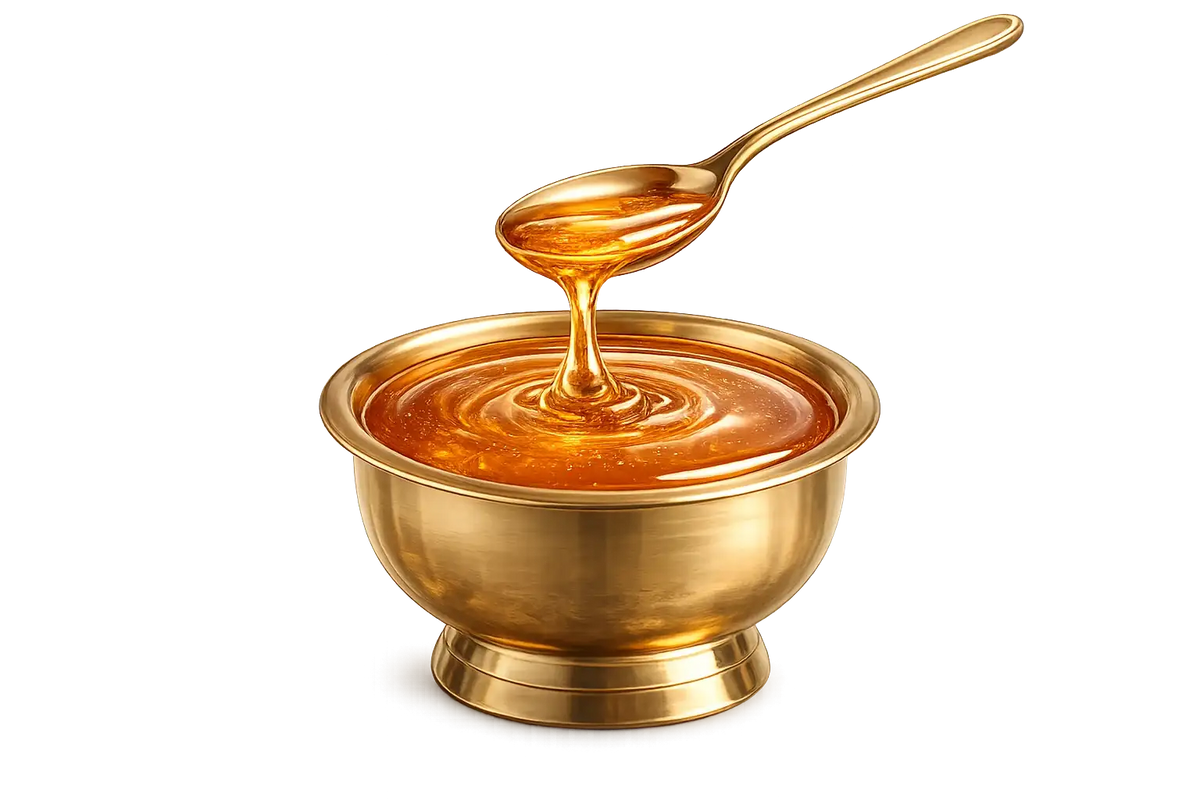
Grown in the hills of Yercaud and prepared with care on the estate.
ABOUT THIS PRODUCT
Everything else on this estate is a decision. When to pick, how long to dry, which sieve. Honey is not: the hives sit inside the canopy and the bees work whatever is flowering above them that fortnight.
So a jar is a record of a season rather than a recipe. Lot 24-B is coffee-led, because the coffee flowered heavily for ten days in March and the hives filled faster in that week than in the rest of the year put together. Frames are drawn once, strained through cloth at hive temperature, and filled the same day. Nothing is pasteurised, nothing is filtered under pressure, and no two lots are blended to make the colour match.
Which means this jar will set. Somewhere around February it goes grainy and pale, and people write to ask what went wrong. Nothing did — honey that stays liquid on a shelf for two years has usually been heated to stop it.
* Best used within 2 years. Transfer to a clean glass container for storage.
Lot 24-B · what the bees worked
Lot 24-B · the mix
Measured by weight of frames drawn, this is the mix in the lot you are buying. Click a bloom to see what it puts into the jar.
By weight of frames drawn. Tap a bloom.
Jamun grows wild along the edges of the estate and nobody planted it. In an April draw it is a minor note; in October it is often the loudest thing in the jar.
Commercial honey is flash-heated near 65°C to stop it setting on the shelf. Ours is strained through cloth at hive temperature, so it crystallises by February. That is the proof, not the fault.
Commercial honey is flash-heated near 65°C to stop it setting. Ours is strained at hive temperature, so it crystallises by February. That is the proof, not the fault.
Cloth, not pressure
A fine filter under pressure takes the pollen out and gives you a clearer jar. It also takes out the only evidence of where the honey came from.
One lot, one date
Colour changes between lots because the flowering does. We would have to mix seasons to make every jar look the same, so we do not.
Two draws a year
Frames come off in April and again in October, and never all of them. The colony keeps what it needs for the monsoon, which is why we run out.
In the kitchen
Everything worth paying for in a raw jar is destroyed somewhere above 40°C. Use it at the end, not while the pan is on.
Warm, not boiling. A spoon into water you can hold your finger in, first thing.
A spoon of honey, pepper cracked over it. The oldest thing anyone on this estate does for a cough.
Set honey works better here than liquid — it sits on top instead of sinking straight through.
Filter coffee comes out near boiling. Sweeten it with jaggery and keep the honey for the tumbler that has cooled.
Still unsure? Get in touch and we will help before you place your order.
No. Cliff Honey won’t develop a grainy or solid texture, so this is not something you should expect from the product. If you notice any unusual change in texture, please contact us.
Yes, in the way the word is supposed to mean: strained through cloth at 40°C, nothing pasteurised, nothing pressure-filtered, nothing added. The pollen is still in it, which is also why the jar is cloudy rather than clear.
Store your honey in a cool, dry place with the lid tightly closed. Keep it away from direct sunlight and moisture, and always use a clean, dry spoon.
